
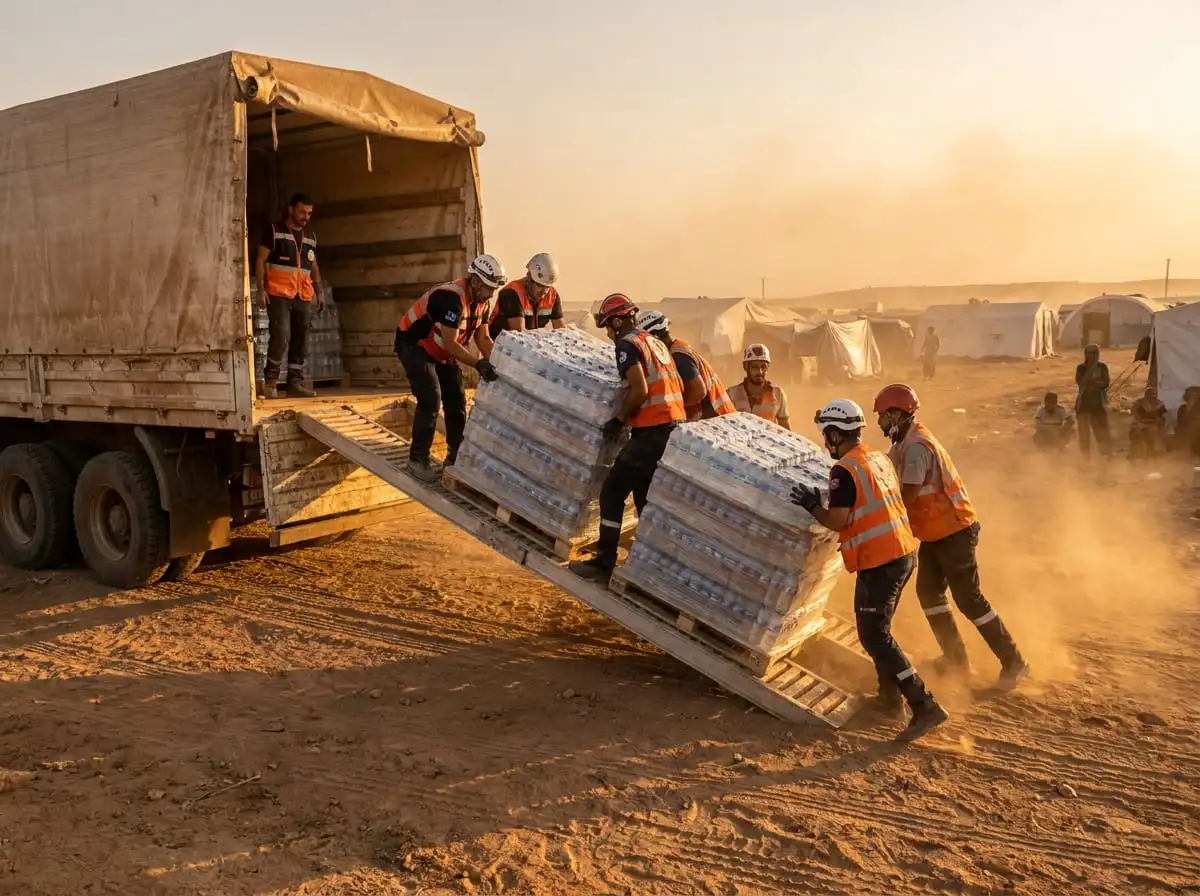

The way we handle water during emergencies is stuck in the 20th century. While we’re out here innovating in every other sector, our plan for when the taps go dry usually boils down to “buy a thousand pallets of plastic bottles and hope for the best.”
At H2O EverywhereTriple Double Real Estate, we’ve always been about looking at the bigger picture and finding the most innovative ways to solve complex problems. Right now, that focus has shifted toward a literal life-and-death challenge: water. We’ve pivoted our energy into H2O Everywhere because we’ve realized that traditional water logistics aren’t just inefficient: they’re fundamentally broken.
Whether you’re running a government agency, a large-scale facility, or a local police precinct, you’re likely making at least a few of these common mistakes. Here are the seven biggest blunders in emergency water logistics and, more importantly, how H2O Everywhere is fixing them with our revolutionary Atmospheric Water Generation (AWG) technology.
- Relying Solely on Bulk Water Tankers
It sounds like a solid plan: if the water main breaks, call in the tankers. But what happens when the roads are flooded? What if a natural disaster has turned the local highway into a parking lot of debris? Relying on a massive truck to get through to your facility is a huge gamble.
The Fix: Decentralized infrastructure. Instead of waiting for a delivery, you should be generating water on-site. Our AWG systems literally pull moisture out of the air. It doesn’t matter if the roads are blocked or the pipes are shattered; as long as there is air, there is water.
- The “Rotational Nightmare” of Bottled Water
If you’re managing a prison or a high-security facility, you know the drill. Most regulations require a 3-day emergency supply of water for every single person on-site. For a large prison, that is a staggering amount of plastic. To make matters worse, that water has a shelf life. Most agencies end up throwing out or “rotating” (aka wasting) their entire stock every three to six months because the plastic starts to degrade and the water goes stale.
The Fix: H2O Everywhere’s AWG units for prisons. By installing our systems, these facilities have a constant, renewable source of healthy drinking water on hand. No more logistical nightmares, no more heavy lifting, and no more throwing away thousands of dollars in plastic every quarter. We solve the “3-day rule” by making the supply infinite.
- Ignoring the PFAS and Microplastic Problem
We’ve all seen the headlines. Traditional bottled water is often loaded with microplastics and “forever chemicals” (PFAS). When you’re asking law enforcement officers or emergency responders to perform at their peak, fueling them with chemical-laden water in a hot plastic bottle is a mistake.
The Fix: We’ve partnered with law enforcement agencies to bring clean drinking water fountains directly to local precincts. Our AWG technology filters the air and the water to a degree that traditional tap or bottled water simply can’t match. It removes PFAS and provides officers with the cleanest hydration possible, helping them stay sharp and healthy on the job.
- Betting Everything on Vulnerable Water Mains
A single construction accident or an aging pipe can shut down an entire city block’s water supply in seconds. If your emergency plan relies on the municipal grid being 100% reliable, you don’t have a plan: you have a hope.
The Fix: Redundancy through technology. By integrating AWG into your facility’s infrastructure, you create a “water island.” Even if the city’s water main is compromised, your precinct or office remains fully operational. It’s the ultimate fail-safe.
- Storing Water in Direct Heat or Poor Conditions
In the chaos of emergency management, water pallets are often left on loading docks or in unconditioned warehouses. As we know from the research, direct sunlight and heat compromise water quality by leaching chemicals from the plastic into the water.
The Fix: H2O Everywhere units are designed to produce fresh water on demand. There is no “storage” in the traditional sense because the water is being generated, filtered, and chilled right when you need it. No more drinking “sun-baked” plastic water.
- High Environmental and Financial Waste
The cost of emergency water isn’t just the price of the bottle. It’s the cost of the fuel to ship it, the labor to move it, and the massive environmental toll of the plastic waste left behind. For government agencies, this is a massive drain on the budget and a PR headache.
The Fix: Sustainability that actually works. By eliminating the need for plastic bottles at the precinct level, we’re helping law enforcement agencies drastically reduce their waste footprint. It’s a win for the budget and a win for the planet. For more on how we’re handling these shifts, you can check out our team page to see the minds behind the move.
- Lack of Mobility in Disaster Response
Most emergency water solutions are static. You either have a tank or you have a pile of bottles. But emergencies are fluid: they move, and your water supply needs to move with them.
The Fix: Our mobile AWG units. We’ve developed larger machines mounted on trailers that can be towed directly to disaster sites. Whether it’s a hurricane-hit neighborhood or a localized crisis, these “water stations on wheels” ensure that the community has immediate access to healthy drinking water without waiting for a supply chain that might be broken.
Scaling a Revolution: Why This Needs to Go National
Our partnership with law enforcement isn’t just about technology; it’s about trust. When a local agency brings an H2O Everywhere trailer into a neighborhood during a crisis, it sends a powerful message. It shows that the agency is proactive, innovative, and truly looking out for the best interest of the citizens they serve. It boosts community confidence at a time when it’s needed most.
We’ve seen the impact these programs have at the local level. From the precinct office where officers get clean, PFAS-free water, to the prisons that no longer have to worry about water main breaks, to the emergency management teams with mobile units: the results are undeniable.
This isn’t just a “cool gadget.” This is the future of how we protect our most vital resource.
Every precinct, every correctional facility, and every emergency management office in the country should have access to AWG technology. We’re moving away from the “old way” of how we bring drinking water law enforcement, the military, governments and in emergency situations and focusing entirely on how H2O can educate and make the biggest impact using our revolutionary AWG technology.
If you’re ready to stop making the same old mistakes with your water logistics and want to see how H2O Everywhere can transform your facility, it’s time to contact us. Let’s stop relying on the rain and start making water from the air.
The technology is here. The partnerships are growing. The revolution is just getting started.