
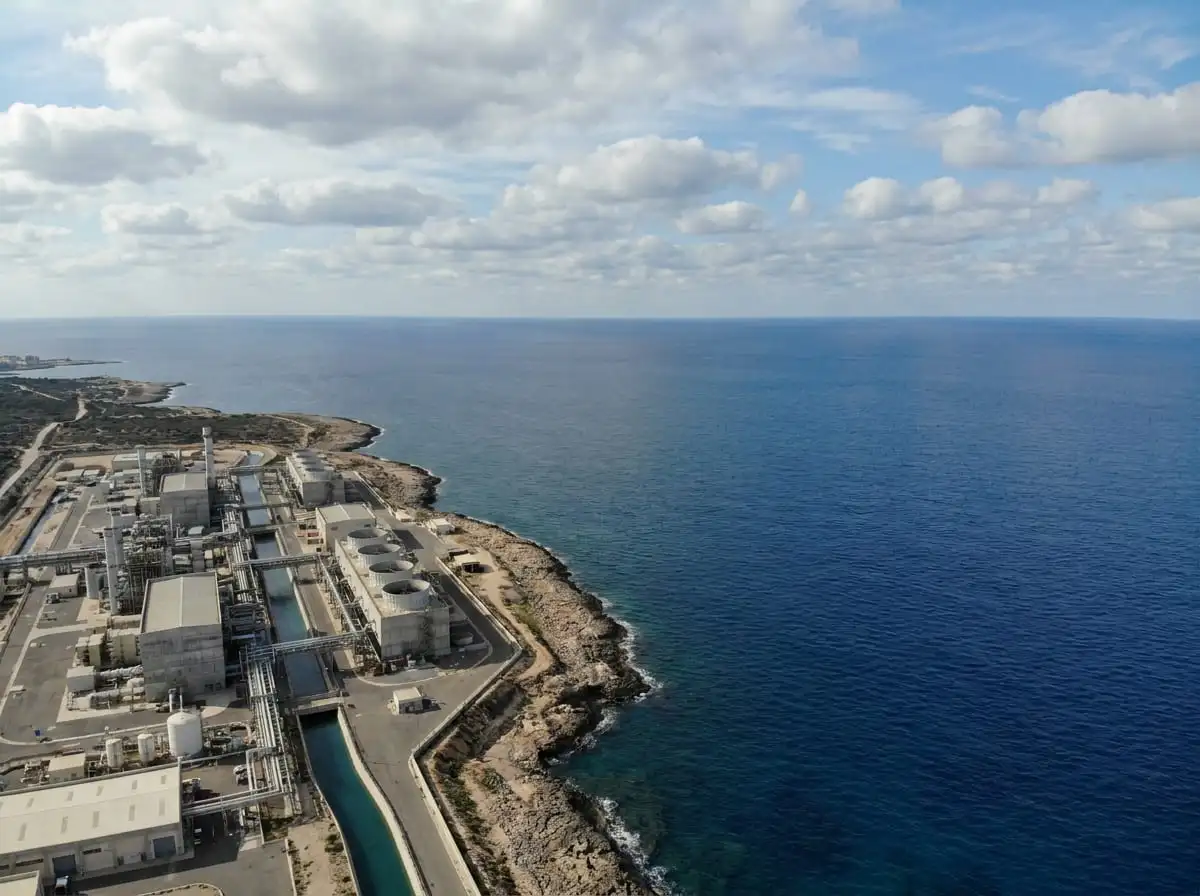

Here’s a wild stat: Building a single desalination plant can cost anywhere from $500 million to over $1 billion. And that’s just to get it up and running.
Now imagine you could pull clean drinking water straight from the air for a fraction of that cost, deploy it wherever you need it, and do it without dumping toxic brine back into the ocean. Sounds like science fiction, right?
Welcome to the world of Atmospheric Water Generation (AWG): and specifically, the game-changing technology from H2O Everywhere that’s rewriting the rules on how we think about water access.
At H2O Everywhere, we are all about innovation that actually solves problems. And when it comes to water: one of humanity’s biggest challenges: H2O AWG machines are not just innovative. It’s essential.
The Desalination Dilemma: Big Money, Bigger Problems
Desalination has been positioned as the silver bullet for water scarcity. Take seawater, strip out the salt, and boom: drinking water for everyone. But here’s the catch (and it’s a big one): desalination is expensive, slow to build, environmentally problematic, and locked into specific coastal locations.
Let’s break down what you’re really getting when you invest in a desalination plant:
- The Price Tag is Insane: A mid-sized desalination facility runs $500 million to $1 billion just for construction. Then you’ve got ongoing energy costs (these things are power hogs), maintenance, and the infrastructure to pipe that water inland. For many cities and regions, that price point is a non-starter.
- The Brine Problem: For every gallon of fresh water you produce, you’re left with super-concentrated saltwater called brine. This stuff is 70% saltier than seawater and often contains chemical residue from the treatment process. Where does it go? Back into the ocean, where it sinks to the bottom and creates “dead zones” that devastate marine ecosystems. Fish, coral, plant life: all casualties of our thirst.
- Location Lock-In: You can only build desalination plants near coastlines. If you’re in Kansas, Arizona, or any landlocked region dealing with water scarcity, you’re out of luck. Even coastal cities have to invest billions in pipelines to move water inland.
- Years to Deploy: From planning to operation, a desalination plant can take 5 to 10 years to come online. When you’re in crisis mode, that timeline is unacceptable.
Desalination isn’t terrible: it’s just outdated, expensive, and limited in scope. There’s a better way.
Enter H2O and AWG: Making Water From Thin Air
Atmospheric Water Generation flips the script entirely. Instead of pulling water from oceans, rivers, or aquifers, AWG units extract moisture directly from the air using humidity. The process is simple, clean, and endlessly renewable.
Here’s how it works: Air is drawn into the H2O Everywhere unit, where it’s cooled to the dew point. Water vapor condenses into liquid, gets filtered through multiple purification stages, and comes out as clean, mineralized drinking water. It’s the same process nature uses: just faster and at the point of need.
The advantages? Let’s count them:
- No infrastructure required: No pipes. No wells. No treatment plants. Just plug it in and you’re producing water.
- Deployable anywhere: Desert, mountain, island, city: if there’s humidity in the air, you can make water.
- Modular and scalable: Need water for 50 people? One unit. Need it for 5,000? Stack more units. You’re not locked into billion-dollar mega-projects.
- Zero environmental harm: No brine. No groundwater depletion. No ecosystem disruption. Just clean extraction from an unlimited resource: air.
And here’s the kicker: H2O Everywhere units are Made in the USA by a veteran-led company that’s focused on durability, reliability, and real-world deployment. These aren’t lab experiments. They’re field-tested machines already changing lives.
Where AWG Shines: Real-World Use Cases
Let’s talk about where this technology actually makes a difference: because it’s not just about replacing desalination. AWG units solve problems that traditional water systems can’t even touch.
Emergency Management: Water When It Matters Most
When hurricanes, earthquakes, or floods wipe out infrastructure, the first thing to go is clean water. Pipes burst. Treatment plants flood. Wells get contaminated. And suddenly, entire communities are left without a lifeline.
H2O Everywhere units can be deployed in hours. Drop them into disaster zones, power them up with generators or solar panels, and you’ve got an immediate source of safe drinking water. No waiting for FEMA trucks. No rationing bottled water. Just reliable, on-demand hydration when people need it most.
This isn’t hypothetical. AWG units are already being used by emergency response teams, military operations, and humanitarian organizations around the world.
Water Scarcity: Solving the Unsolvable
Nearly 2 billion people live in regions experiencing severe water scarcity. Many of these areas are landlocked, with no access to oceans for desalination and depleted aquifers that can’t keep up with demand.
AWG changes the equation. Communities in Sub-Saharan Africa, rural India, and the American Southwest can now generate their own water supply without drilling deeper wells or trucking in bottled water from hundreds of miles away. It’s decentralized, sustainable, and empowering.
Even in developed nations, water scarcity is becoming a real threat. The Colorado River is drying up. California’s groundwater is disappearing. Instead of waiting for billion-dollar infrastructure projects, forward-thinking municipalities and developers are turning to AWG as a supplement: or even a replacement: for traditional sources.
Contaminated Water: When the Pipes Are Poisoned
Remember Flint, Michigan? Lead-contaminated pipes poisoned an entire city’s water supply. But Flint isn’t alone. Thousands of communities across the U.S. deal with aging infrastructure, chemical runoff, industrial pollution, and unsafe groundwater.
AWG units bypass the problem entirely. You’re not pulling water from contaminated sources: you’re making it fresh from the air. No lead. No PFAS. No agricultural runoff. Just pure, mineralized H2O produced on-site.
For schools, hospitals, and residential developments in areas with questionable water quality, AWG provides peace of mind and a hedge against infrastructure failure.
This is what innovation looks like when it’s applied with purpose.
The Bottom Line: Air Beats Ocean
Desalination had its moment. But when you stack up the costs, the environmental impact, and the limitations, it’s clear that AWG is the smarter play for the 21st century.
H2O Everywhere is leading the charge with technology that’s reliable, scalable, and ready to deploy right now. Whether you’re responding to a disaster, solving chronic water scarcity, or just want to ensure clean drinking water without the worry, AWG delivers.
H2O Everywhere is exactly the kind of forward-thinking move that keeps us ahead of the curve.
We’re not waiting for the world to change: we’re changing it ourselves.
Because at the end of the day, water isn’t just a resource. It’s a human right. And with AWG, it’s finally within reach for everyone.